Bitcoin Needs a Weekly Close Above Key Support in 2026 to Keep the Crypto Bull Run Alive
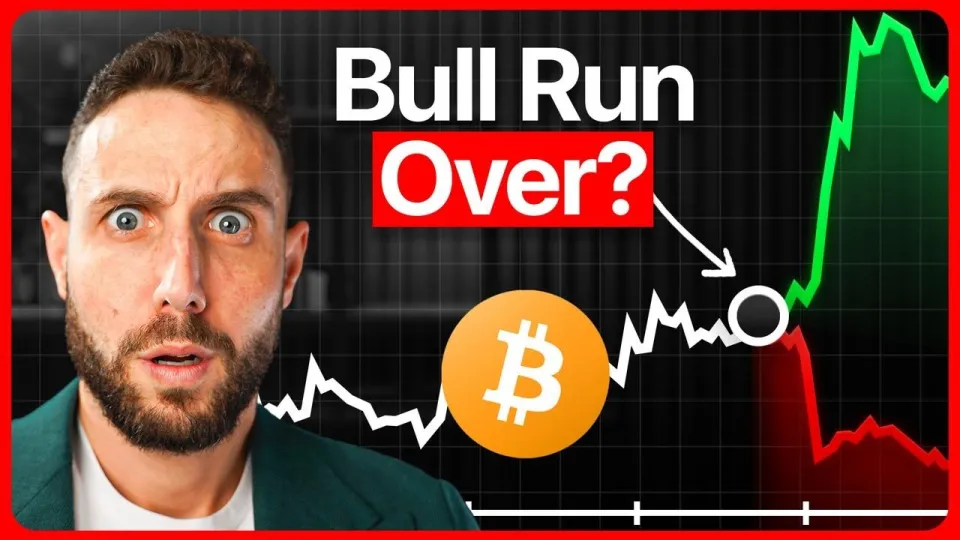
Video: Bitcoin Has 2 DAYS to Save the Crypto Bull Run
You can order the same kind of articles for your own video to boost it on YouTube and Google. Just message the Telegram bot @sat_sit_bot. The bot writes and publishes the articles itself (with your YouTube video embedded) on popular topical websites (no ads). Free trial — 50 articles.
· based on the channel EllioTrades
Key takeaways
- Bitcoin's weekly candle close is the single most important trigger for whether the crypto bull run continues or the market rolls over into a deeper correction.
- A weekly close below the support zone would invalidate the higher-low structure and shift the plan from buying dips to protecting capital.
- If support holds, the plan is to add exposure to BTC and high-beta altcoins rather than chase late entries.
- A retrace toward the low $100K area is treated as a buying opportunity only if the weekly close confirms support.
- Bitcoin dominance is the tie-breaker: rising dominance with falling alt prices means the altcoin leg of the bull run is not ready.
Bitcoin has roughly two days left before its weekly candle closes, and that single close is the deciding factor for whether the crypto bull run continues or the market slips into a deeper correction. The setup is simple: if BTC holds its support zone into the weekly close, the uptrend structure stays intact and dips remain buying opportunities; if it closes below, the higher-low structure breaks and the plan shifts to capital preservation. The practical takeaway for traders is to watch the weekly close, not the intraday noise, and to size positions accordingly — Kalshi's market page is where you can register and trade event contracts on where prices land.
Why the weekly close matters more than any single candle
A weekly close is the market's settlement of a full week of order flow, so it filters out the wicks, liquidation cascades and weekend liquidity gaps that dominate lower timeframes. Bitcoin's trend has been defined by a sequence of higher lows on the weekly chart, and each of those lows was confirmed by a close rather than an intraday touch. That is why a single daily flush below support is not automatically bearish, while a weekly close below it is a structural signal. Traders who react to every 4-hour candle get chopped up; traders who wait for the weekly close give up a little entry precision in exchange for a much higher signal-to-noise ratio. The same logic applies to the altcoin market, where most majors simply follow BTC's weekly direction with more leverage.
The two scenarios and what each one triggers
There are only two outcomes that matter, and each one has a clear playbook.
- Support holds into the weekly close. The higher-low structure stays valid, the bull run thesis remains alive, and retraces toward the low $100K region are treated as entries rather than exits. In this case the plan is to add exposure to BTC and to high-beta altcoins on strength confirmation, not to chase green candles.
- Weekly close below support. The structure breaks, the market enters a corrective phase, and the correct response is to reduce leverage, raise stablecoin weight and wait for a new base to form. Buying the breakdown in this scenario is how accounts get destroyed.
The important detail is that both scenarios are decided by the same candle. That is why the next 48 hours carry outsized weight relative to a normal week: positioning before the close is cheap, and positioning after it is expensive.
Bitcoin levels traders are watching
The reference points that matter are the support zone that has held on prior weekly tests and the psychological round numbers above and below it. A retrace into the low $100K area is the most discussed dip-buy zone, while a decisive weekly close beneath the support band would put the mid-$90K region in play as the next structural test. On the upside, reclaiming the recent range high is what would confirm that the correction was only a shakeout. Traders should mark these levels in advance, decide position sizes before the candle closes, and avoid adjusting the plan mid-candle — the whole point of a rules-based approach is that the decision is made before emotions enter the picture.
Altcoins: where the asymmetric setups sit if BTC holds
If Bitcoin confirms support, the higher-return part of the trade is in altcoins that have been beaten down but retain their trend structure. The filter is straightforward: the altcoin must be holding above its own weekly support, must not be making fresh lows while BTC holds, and should have a catalyst or narrative that is still intact. Coins that bleed to new lows while BTC consolidates are a warning, not a discount. The other side of the trade is shorting weak names — a popular idea in the current tape — but shorting an altcoin into a confirmed BTC weekly hold is one of the fastest ways to get squeezed, because alt betas are multiples of BTC's move in both directions. Position sizing matters more than picking the single best coin.
Bitcoin dominance is the tie-breaker for altseason
Bitcoin dominance answers the question that price alone cannot: is capital rotating into alts or hiding in BTC? When dominance rises while altcoin prices fall, the market is in a defensive posture and the altcoin leg of the bull run is not ready, regardless of how cheap individual coins look. When dominance rolls over and BTC holds its support, that is the combination that historically precedes broad altcoin outperformance. Watching this ratio alongside the weekly BTC close prevents the most common mistake in this phase: buying alts too early because they are down a lot, rather than because capital is actually rotating.
Common doubts from traders right now
Sentiment has flipped from very bullish to bearish on a single retrace, which is itself useful information about how crowded positioning had become. Several recurring doubts deserve direct answers. First, a short bear market does not automatically mean a weak next bull phase — market cycles are shaped by liquidity and positioning, not by the calendar length of the drawdown. Second, wanting a deeper flush to buy cheaper is a trade-off: a confirmed continuation at higher prices carries better odds than a cheap entry into a broken structure. Third, weekend liquidity is thin and market makers are less active, so a weekend move is weak evidence compared with a weekly close. Fourth, some traders are watching index-inclusion decisions for digital-asset treasury companies as a separate catalyst that could hit flows independently of BTC's chart. None of these doubts change the plan; they change position size.
Tools and links mentioned in the breakdown
- Trade on Kalshi and claim the $50 bonus after a $50 trade
- Liquid — trade with 10% off trading fees
- WEEX — deposit $100 and unlock up to $4,000 in bonuses
- Follow the public trading journey on fomo
- EllioTrades on X
Bottom line
Bitcoin's next weekly close is the decision point: hold support and the crypto bull run stays intact with dips toward the low $100K area as entries, close below and the correct move is defense rather than heroics. Altcoin exposure only makes sense after BTC confirms, and Bitcoin dominance is the cleanest check on whether rotation is real. The full trade-by-trade reasoning, levels and altcoin picks come from the EllioTrades breakdown, which is worth watching before the candle closes. If you want to position around the outcome rather than just watch it, register on Kalshi and claim the $50 bonus before the weekly close decides the next move.
Questions & answers
What happens to Bitcoin if the weekly candle closes below support?
The higher-low structure that defines the uptrend breaks, which turns the setup from a buy-the-dip market into a corrective phase. In practice that means cutting leverage, holding more stablecoins and waiting for a new base instead of buying the breakdown. A single daily wick below support is not the same signal as a weekly close below it.
Is a retrace to the low $100K area a buying opportunity?
It is a buying opportunity only if the weekly close confirms that support held. If support breaks, the same price level becomes a trap rather than a discount. Decide the level and the position size before the candle closes so the decision is not made in the middle of the move.
Why does Bitcoin dominance matter for altcoins?
Dominance shows whether capital is rotating into altcoins or hiding in BTC. Rising dominance with falling alt prices means the altcoin leg of the bull run is not ready, no matter how cheap the coins look. A rolling-over dominance ratio combined with BTC holding support is the combination that historically precedes broad alt outperformance.
Does a short bear market mean the next bull run will be weak?
Not necessarily. Cycle strength is driven by liquidity conditions and positioning rather than by how many weeks a drawdown lasts. A shallow correction can still be followed by a strong expansion if capital flows return, just as a long drawdown does not guarantee a powerful recovery.
Source: Bitcoin Has 2 DAYS to Save the Crypto Bull Run · Markdown version